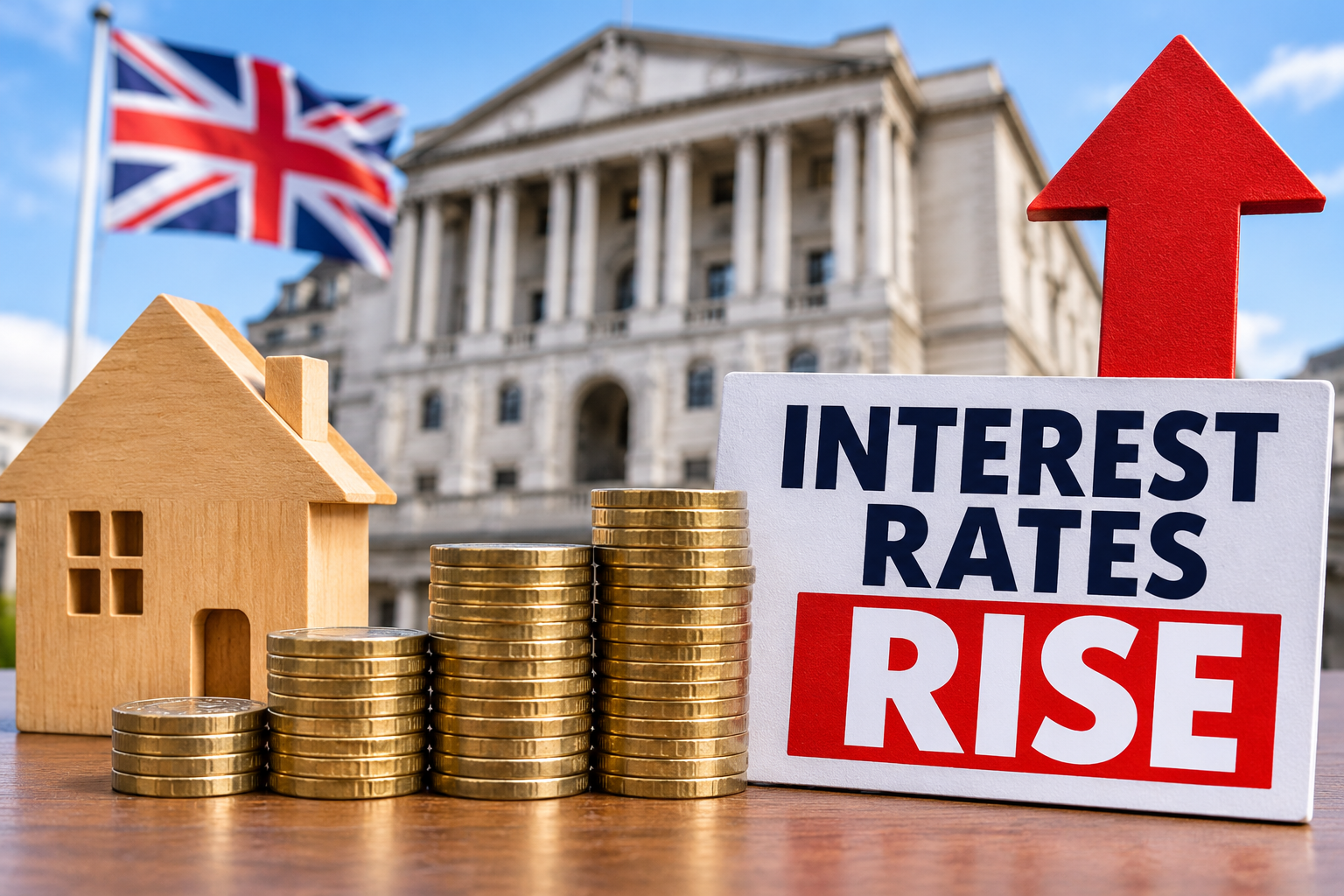

Millions of households across the UK are facing another financial headache after the Bank of England announced a rise in interest rates.
On Thursday (November 5), the Bank of England increased its base interest rate from 3.75% to 4%, marking the first increase since August 2023.
The decision comes amid growing concerns about rising inflation, with higher energy prices linked to the ongoing conflict in the Middle East putting additional pressure on household finances.
But what does the increase actually mean for ordinary people?
What does it mean for mortgage holders?
For homeowners with tracker mortgages, the increase is likely to mean higher monthly repayments because these mortgages generally follow the Bank of England’s base rate.
Those on standard variable rate mortgages could also see their payments increase, depending on their lender.
However, anyone currently on a fixed-rate mortgage won’t see their monthly payments automatically change as a result of Thursday’s announcement.
The impact could instead be felt when their current deal comes to an end and they need to secure a new mortgage.
Will savings rates go up?
There could be some better news for savers.
Higher interest rates can encourage banks and building societies to offer more attractive savings rates, meaning people with money put aside could potentially earn more interest.
However, banks don’t always pass on the full increase, so it’s worth comparing savings accounts.
What about loans and credit cards?
Borrowing could also become more expensive.
People taking out personal loans or using certain types of credit may face higher interest charges, although the impact will depend on the product and lender.
Credit card rates don’t automatically increase in line with the Bank Rate.
Why have interest rates gone up?
The Bank of England is trying to bring inflation back under control.
Inflation reached 3.5% in September, and the Bank now expects it could climb to around 5% by the middle of 2027.
Rising energy prices are a major factor behind the decision.
By increasing interest rates, the Bank hopes to make borrowing more expensive and encourage people to spend less, helping to slow the pace at which prices rise.
Could interest rates rise again?
There are no guarantees that this is the last increase.
Bank of England Governor Andrew Bailey warned that further rises could be possible if the conflict in the Middle East continues to put pressure on energy prices.
However, he stressed that Thursday’s decision should not automatically be seen as the beginning of a long series of increases.
The next interest rate decision is due on December 17.
For households already struggling with mortgage payments, energy bills and the cost of everyday essentials, Thursday’s announcement will be unwelcome news.
And with inflation expected to rise further, many will be watching closely to see what happens next.


Leave a Reply